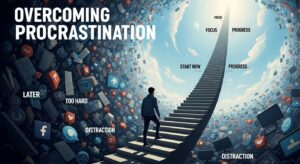


It’s 5 p.m. and you’ve just realized that report you’ve been putting off is due tomorrow. It’s time to buckle down, open your computer… and check your phone. Maybe catch up on your favorite YouTube channel? Actually, you should probably make dinner first. You usually like cooking, though it’s hard to enjoy with this work hanging over your head, and oh— it’s actually pretty late!
Maybe you should just try again in the morning? This is the cycle of procrastination, and I promise you, we have all been there. But why do we keep procrastinating even when we know it’s bad for us? To be clear, putting something off isn’t always procrastinating. Responsible time management requires deciding which tasks are important and which ones can wait.
 Procrastination is when we avoid a task we said we would do, for no good reason, despite expecting our behavior to bring negative consequences. Obviously, it’s irrational to do something you expect to harm you. But ironically, procrastination is the result of our bodies trying to protect us, specifically by avoiding a task we see as threatening. When you realize you need to write that report, your brain responds like it would to any incoming threat. Your amygdala, a set of neurons involved in emotional processing and threat identification, releases hormones including adrenaline that kick off a fear response.
This stress-induced panic can overpower the impulses from your prefrontal cortex, which typically help you think long term and regulate your emotions. And it’s in the midst of this fight, flight, or freeze response that you decide to handle the threat by avoiding it in favor of some less stressful task. This response might seem extreme— after all, it’s just a deadline, not a bear attack. But we’re most likely to procrastinate tasks that evoke negative feelings, such as dread, incompetence, and insecurity. Studies of procrastinating university students have found participants were more likely to put off tasks they perceived as stressful or challenging.
And the perception of how difficult the task is increases while you’re putting it off. In one experiment, students were given reminders to study throughout the day. While they were studying, most reported that it wasn’t so bad. But when they were procrastinating, they consistently rated the idea of studying as very stressful, making it difficult to get started. Because procrastination is motivated by our negative feelings, some individuals are more susceptible to it than others.
People who have difficulty regulating their emotions and those who struggle with low self-esteem are much more likely to procrastinate, regardless of how good they are at time management. However, it’s a common misconception that all procrastinators are lazy. In the body and brain, laziness is marked by no energy and general apathy. When you’re feeling lazy, you’re more likely to sit around doing nothing than distract yourself with unimportant tasks. In fact, many people procrastinate because they care too much.
 Procrastinators often report a high fear of failure, putting things off because they’re afraid their work won’t live up to their high standards. Whatever the reason for procrastination, the results are often the same. Frequent procrastinators are likely to suffer from anxiety and depression, ongoing feelings of shame, higher stress levels and physical ailments associated with high stress. Worst of all, while procrastination hurts us in the long run, it does temporarily reduce our stress level, reinforcing it as a bodily response for coping with stressful tasks. So, how can we break the cycle of procrastination?
Traditionally, people thought procrastinators needed to cultivate discipline and practice strict time management. But today, many researchers feel the exact opposite. Being too hard on yourself can layer additional bad emotions onto a task, making the threat even more intense. To short-circuit this stress response, we need to address and reduce these negative emotions. Some simple strategies include breaking a task into smaller elements or journaling about why it’s stressing you out and addressing those underlying concerns.
Try removing nearby distractions that make it easy to impulsively procrastinate. And more than anything, it helps to cultivate an attitude of self-compassion, forgiving yourself, and making a plan to do better next time. Because a culture that perpetuates this cycle of stress and procrastination hurts all of us in the long term.
https://link.hotrckng.com/aff_c?offer_id=12&aff_id=1331
https://www.sciencedaily.com/releases/2014/01/140102133635.htm
https://academic.oup.com/ajcn/article-abstract/30/4/531/4650242?redirectedFrom=fulltext


Author: yoselkbaez36ck
Discover the Inspirational Journey of Jose Amoros I hope this message finds you well. I wanted to introduce you to a compelling narrative that might inspire and resonate with you: "Biographical Info de Jose Amoros." Jose Amoros, renowned for his innovative contributions and profound insights, offers a remarkable story of perseverance and achievement. His journey is a testament to the power of resilience and vision, illustrating how dedication can transcend obstacles and lead to impactful success. Diving into Jose's biography unveils lessons on leadership, creativity, and transformation—elements that are essential in today's fast-evolving landscape. Whether you're looking for motivation, new perspectives, or inspiring stories, Jose’s experiences can provide valuable takeaways for your own endeavors. I'd love to discuss how his journey can inspire and benefit [https://website.ws/yosekbaez60/] as you navigate your path toward continued success. Are you available for a brief call this week? Looking forward to the opportunity to connect. Best regards,