If you're looking to make money online, whether by starting a new business, expanding your physical business to the web, or simply trying to earn extra income, you need to know what works on the internet today!
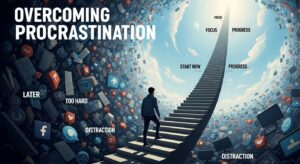
What if I told you your biggest obstacle to success isn’t lack of time or talent, but something far more insidious? Why is it that in an age of unprecedented convenience and technology, true productivity feels harder than ever to achieve? The answer lies in a silent war being waged for your most precious resource, your attention. Every ping, notification, and open browser tab represents another skirmish in this daily battle. Cal Newport in his groundbreaking book, Deep Work, reveals a startling truth.
The ability to concentrate without distraction has become increasingly rare at precisely the same moment it has become increasingly valuable in our economy. This creates a massive opportunity for those willing to cultivate this skill. When psychologist Mahali Chicken Mihayi studied peak performers across various fields, he discovered they all shared one common experience. the state of flow, that magical zone where time disappears and work becomes effortless. But here’s the catch.
Flow states require approximately 15 minutes of uninterrupted focus to achieve. In our current environment of constant interruptions, most people never even reach this threshold. The modern workplace has become a minefield of distraction. But the solution lies in understanding our biological rhythms. Research from the University of Illinois shows our brains naturally operate in cycles of about 90 minutes. This isn’t just true for sleep. Our waking focus follows these same Ultradian rhythms. Cal Newport’s deep work introduces the concept of attention capital. Just as financial capital can be invested for future returns, your attention can be invested in deep work that compounds over time. The key is working with your biology rather than against it.
Schedule your most demanding cognitive work during your personal peak hours, typically late morning for most people. The legendary composer Lewis Van Beaven understood this principal centuries ago. His daily routine involved waking at dawn and working with intense focus until about 2 p.m. Afternoons were reserved for walks and lighter work. This rhythm allowed him to produce some of history’s greatest music despite progressive hearing loss. To implement this today, start by identifying your two golden hours. These are the hours when you’re naturally most alert and creative. Guard these hours religiously for your most important work. Treat them with the same importance as a meeting with your most valuable client.
Because in truth, that’s exactly what they are. In a world that glorifies multitasking, Gary Keller’s The One Thing presents a radical counterargument. Extraordinary results come not from doing many things well, but from doing one thing exceptionally. This principle is echoed in the work of psychologist Anders Ericson, whose research on expert performance revealed that deliberate practice on a single skill drives mastery. Consider the case of Warren Buffett and his 255 rule. When advising his pilot on career focus, Buffett had him list 25 career goals, then circle just five. The surprising instruction, avoid the other 20 at all costs. This level of ruthless prioritization creates the space for exceptional results. When we attempt to multitask, we’re not actually doing multiple things simultaneously. Our brains are rapidly switching between tasks, a process that creates attention residue.
Psychologist Sophie Leroy discovered that when we switch tasks, part of our attention remains stuck on the previous activity, reducing our performance on the new task by up to 40%. Apply this by starting each day with a focusing question. What is the one thing that if accomplished today would make everything else easier or unnecessary? Place this question somewhere visible as a constant reminder. The clarity this creates is transformative. Mel Robbins uncovered a profound truth about human behavior. There’s a critical 5-second window between having an intention to act and your brain sabotaging it with excuses. Her 5-second rule taps into what neuroscientists call the prefrontal cortex, the part of your brain responsible for intentional action. This principle is supported by research on implementation intentions from psychologist Peter Galwitzer. By creating specific if then plans, you essentially program your brain to act automatically.
For instance, if it’s 9:00 a.m., then I begin writing immediately. The simplicity belies its effectiveness. Studies showed this technique can more than double goal achievement rates. The ancient stoics practiced a similar concept they called the premeditatio mealorum. By mentally rehearsing challenges in advance, they reduced resistance when facing them in reality. Modern athletes use this same approach. Before a big game, they visualize not just success, but overcoming obstacles. To harness this power, create your own focus triggers. It could be as simple as putting on specific music, lighting a candle, or arranging your workspace in a particular way. Over time, these cues become neurological shortcuts to deep focus. Cal Newport’s digital minimalism presents a sobering reality. The average person spends over 4 hours daily on their smartphone. That’s 60 full days per year.
More disturbing is how these interruptions fracture our attention. Research from UC Irvine shows it takes an average of 23 minutes to fully recover focus after an interruption. The solution lies in what psychologist BJ Fog calls environmental design. Make good behaviors easy and bad behaviors hard. For instance, author Jonathan Frane famously removed the internet card from his computer while writing. Less extreme options include using website blockers during work hours or keeping your phone in another room. Historical figures understood this intuitively. Victor Hugo would write naked, having instructed his servant to hide his clothes until he’d met his daily writing quota. While we needn’t go that far, the principle remains sound. Create physical barriers to distraction.
A powerful modern adaptation is the concept of grayscale mode. By removing color from your smartphone display, you reduce its dopamine triggering effects by up to 40%. It’s a simple change that can dramatically decrease compulsive checking. Jim layers the power of full engagement overturned conventional wisdom about productivity. Where time management focuses on hours, energy management recognizes that not all hours are created equal. Your cognitive performance fluctuates dramatically throughout the day based on numerous factors. Research from the Dragium Group found an interesting pattern among their most productive employees. They worked for an average of 52 minutes followed by a 17-minute break.
This aligns with what sleep scientists have discovered about our natural ultradian rhythms. Nutrition plays a crucial role in mental performance. Studies show that protein Ricch snacks sustain cognitive function better than carbohydrate heavy alternatives. The brain, while only 2% of body weight, consumes 20% of our energy.
Feeding it properly, is crucial for sustained focus. The ancient Roman practice of the afternoon siesta, still common in many cultures, reflects this biological reality. Rather than fighting afternoon drowsiness with caffeine, a brief 20inut nap can restore alertness more effectively. Imagine looking back a year from now at everything you’ve accomplished, the projects completed, the skills mastered, the goals achieved. This future isn’t about luck or talent. It’s about daily decisions to protect and direct your attention. The philosopher William James observed over a century ago that the ability to voluntarily bring back a wandering attention is the very root of judgment, character, and will. Today, this ability has become a superpower.
Start small. Choose just one of these strategies to implement tomorrow. Perhaps it’s scheduling your first 90-minute-deep work session. Maybe it’s identifying your one thing each morning. Even small improvements compound dramatically over time. What’s the one distraction you commit to eliminating starting today? Share it in the comment section below. Remember, in a world designed to distract, focus is your competitive advantage. The choice is yours. Will you continue being pulled in every direction, or will you take control and direct your attention where it matters most? 5 4 3 2 1. What will you do next?
I hope this message finds you well. I wanted to introduce you to a compelling narrative that might inspire and resonate with you: “Biographical Info de Jose Amoros.”
Jose Amoros, renowned for his innovative contributions and profound insights, offers a remarkable story of perseverance and achievement. His journey is a testament to the power of resilience and vision, illustrating how dedication can transcend obstacles and lead to impactful success.
Diving into Jose’s biography unveils lessons on leadership, creativity, and transformation—elements that are essential in today’s fast-evolving landscape. Whether you’re looking for motivation, new perspectives, or inspiring stories, Jose’s experiences can provide valuable takeaways for your own endeavors.
I’d love to discuss how his journey can inspire and benefit [https://website.ws/yosekbaez60/] as you navigate your path toward continued success. Are you available for a brief call this week?
Looking forward to the opportunity to connect.
Best regards,
Discover more from The most effective and simplest marketing techniques!
Subscribe to get the latest posts sent to your email.
Discover the Inspirational Journey of Jose Amoros I hope this message finds you well. I wanted to introduce you to a compelling narrative that might inspire and resonate with you: "Biographical Info de Jose Amoros." Jose Amoros, renowned for his innovative contributions and profound insights, offers a remarkable story of perseverance and achievement. His journey is a testament to the power of resilience and vision, illustrating how dedication can transcend obstacles and lead to impactful success. Diving into Jose's biography unveils lessons on leadership, creativity, and transformation—elements that are essential in today's fast-evolving landscape. Whether you're looking for motivation, new perspectives, or inspiring stories, Jose’s experiences can provide valuable takeaways for your own endeavors. I'd love to discuss how his journey can inspire and benefit [https://website.ws/yosekbaez60/] as you navigate your path toward continued success. Are you available for a brief call this week? Looking forward to the opportunity to connect. Best regards,
https://yosekbaez60.ws/feed/ # Pick a realistic goal, such as losing a small amount of weight or building healthier habits Big change usually begins with a small, believable decision. Not a dramatic promise made on a Monday morning. Not a total life overhaul … Continue reading → The post Pick a realistic goal, such as losing a […]
https://yosekbaez60.ws/feed/ # Create a simple schedule A simple schedule can turn a messy day into something you can actually move through. It does not need to be perfect, color-coded, or packed with ambition. In fact, the best schedules are usually plain. … Continue reading → The post Create a simple schedule appeared first on The […]
https://yosekbaez60.ws/feed/ # Explain that small, steady changes are the best place to start When people decide they want their life to change, they often imagine something dramatic. A complete reset. A new routine that begins at 5 a.m. A strict budget. … Continue reading → The post Explain that small, steady changes are the best […]
https://yosekbaez60.ws/feed/ # Set small weekly goals Big goals are exciting at the beginning. They give us a picture of a better life: a healthier body, a stronger career, a calmer home, a finished project, a business that finally exists outside our … Continue reading → The post Set small weekly goals appeared first on The […]
https://yosekbaez60.ws/feed/ # Reassure readers that weight loss does not have to be confusing Weight loss can feel far more complicated than it needs to be. One person says to cut carbs. Another says to fast. Someone else insists that the answer … Continue reading → The post Reassure readers that weight loss does not have […]
https://yosekbaez60.ws/feed/ Hullo! And welcome back to How to Hen I recently received a message on Facebook from a bridesmaid, who is currently here in Dubai, and was organizing a hen party in the UK. And since new restrictions have come in, … Continue reading → The post How to plan a bachelorette party you can’t […]
https://yosekbaez60.ws/feed/ I’m Sam from baby monitors direct we are the UK’s largest online baby monitor specialist and pride ourselves on not only having the expert knowledge but also speaking English and not technical jargon sometimes just listening out for your baby … Continue reading → The post Which Baby Monitor Do Need Buying Guide Video […]
https://yosekbaez60.ws/feed/ CPA Article Marketing Is It so Different? There are two simple points about article marketing to drive traffic to CPA campaigns that many marketers new to CPA seem to be missing, these days. 1. Write multiple articles (or have them … Continue reading → The post CPA Article Marketing Is It so Different? appeared […]
https://yosekbaez60.ws/feed/ PAUL BOTTOS: This all started with me collecting Mickey Mouse about 30 years ago. I started collecting all the things Mickey Mouse that I could find and then it’s evolved itself into this large Mickey Mouse collection. Sometimes I think … Continue reading → The post Mickey Mouse Collector Paul Bottos D23 Member Documentary […]
https://yosekbaez60.ws/feed/ Essential oils have kind of a bad reputation. Like a modern day snake oil, they’re touted as cures for all sorts of ailments, from reducing inflammation to treating headaches. Many of these claims are fairly harmless. But some are big, … Continue reading → The post Which Essential Oils Actually Work? appeared first on […]
yoselkbaez36ck
FREE REPORT
FREE REPORT: Get Free Money and Help to Start or Expand Any Business, Non-Profit, Invention or Freelance Opportunity in 2025
Want Free Money to End Financial Stress and Build a Better Future for Yourself?
If you’re looking to make money online, whether by starting a new business, expanding your brick-and-mortar business online, or simply trying to earn extra income, you need to know what’s working on the internet today! Subscribe to our updates
Download All of My Best Reports Below For FREE!
Want Personal Help to Find Grants That You’re Eligible For, Fill Out Applications and Secure Grant Money? Join LeskoHelp.com
All of this for as little as $8.30/mo:
✅ Access to 500+ custom databases of grants
✅ For rent, bills, education, business, medical care & more
✅ Step-by-step videos showing how to apply
✅ Community support + Daily Zoom calls with experts
✅ Entry into Lesko’s $45,000 Monthly Grant Giveaway
https://yosekbaez60.ws/feed/ # Pick a realistic goal, such as losing a small amount of weight or building healthier habits Big change usually begins with a small, believable decision. Not a dramatic promise made on a Monday morning. Not a total life overhaul … Continue reading → The post Pick a realistic goal, such as losing a […]
https://yosekbaez60.ws/feed/ # Create a simple schedule A simple schedule can turn a messy day into something you can actually move through. It does not need to be perfect, color-coded, or packed with ambition. In fact, the best schedules are usually plain. … Continue reading → The post Create a simple schedule appeared first on The […]
https://yosekbaez60.ws/feed/ # Explain that small, steady changes are the best place to start When people decide they want their life to change, they often imagine something dramatic. A complete reset. A new routine that begins at 5 a.m. A strict budget. … Continue reading → The post Explain that small, steady changes are the best […]
https://yosekbaez60.ws/feed/ # Set small weekly goals Big goals are exciting at the beginning. They give us a picture of a better life: a healthier body, a stronger career, a calmer home, a finished project, a business that finally exists outside our … Continue reading → The post Set small weekly goals appeared first on The […]
https://yosekbaez60.ws/feed/ # Reassure readers that weight loss does not have to be confusing Weight loss can feel far more complicated than it needs to be. One person says to cut carbs. Another says to fast. Someone else insists that the answer … Continue reading → The post Reassure readers that weight loss does not have […]
https://yosekbaez60.ws/feed/ Hullo! And welcome back to How to Hen I recently received a message on Facebook from a bridesmaid, who is currently here in Dubai, and was organizing a hen party in the UK. And since new restrictions have come in, … Continue reading → The post How to plan a bachelorette party you can’t […]
https://yosekbaez60.ws/feed/ I’m Sam from baby monitors direct we are the UK’s largest online baby monitor specialist and pride ourselves on not only having the expert knowledge but also speaking English and not technical jargon sometimes just listening out for your baby … Continue reading → The post Which Baby Monitor Do Need Buying Guide Video […]
https://yosekbaez60.ws/feed/ CPA Article Marketing Is It so Different? There are two simple points about article marketing to drive traffic to CPA campaigns that many marketers new to CPA seem to be missing, these days. 1. Write multiple articles (or have them … Continue reading → The post CPA Article Marketing Is It so Different? appeared […]
https://yosekbaez60.ws/feed/ PAUL BOTTOS: This all started with me collecting Mickey Mouse about 30 years ago. I started collecting all the things Mickey Mouse that I could find and then it’s evolved itself into this large Mickey Mouse collection. Sometimes I think … Continue reading → The post Mickey Mouse Collector Paul Bottos D23 Member Documentary […]
https://yosekbaez60.ws/feed/ Essential oils have kind of a bad reputation. Like a modern day snake oil, they’re touted as cures for all sorts of ailments, from reducing inflammation to treating headaches. Many of these claims are fairly harmless. But some are big, … Continue reading → The post Which Essential Oils Actually Work? appeared first on […]
I hope this message finds you well. I wanted to introduce you to a compelling narrative that might inspire and resonate with you: “Biographical Info de Jose Amoros.”
Jose Amoros, renowned for his innovative contributions and profound insights, offers a remarkable story of perseverance and achievement. His journey is a testament to the power of resilience and vision, illustrating how dedication can transcend obstacles and lead to impactful success.
Diving into Jose’s biography unveils lessons on leadership, creativity, and transformation—elements that are essential in today’s fast-evolving landscape. Whether you’re looking for motivation, new perspectives, or inspiring stories, Jose’s experiences can provide valuable takeaways for your own endeavors.
I’d love to discuss how his journey can inspire and benefit [https://website.ws/yosekbaez60/] as you navigate your path toward continued success. Are you available for a brief call this week?
Website builder, hosting, email accounts, marketing tools, and more.
**🌍 Have You Heard About GDI? ** Discover a simple, powerful way to build an online business with real income potential. With GDI, you get your own domain, website tools, marketing resources, and a proven system that helps you grow — even if you’re just getting started. 👉 **Ready to register and start your journey? Now is the perfect time. **Join thousands who are already building their digital future with GDI!
1-Click Income System
This Money-Making System with MULTIPLE Ways to Get Paid!
Before you go, 7 simplified step-by-step strategies that can generate $100 to $500 a day with just a few hours of work! This is a Gold Member download.



 Flow states require approximately 15 minutes of uninterrupted focus to achieve. In our current environment of constant interruptions, most people never even reach this threshold. The modern workplace has become a minefield of distraction. But the solution lies in understanding our biological rhythms. Research from the University of Illinois shows our brains naturally operate in cycles of about 90 minutes. This isn’t just true for sleep. Our waking focus follows these same Ultradian rhythms. Cal Newport’s deep work introduces the concept of attention capital. Just as financial capital can be invested for future returns, your attention can be invested in deep work that compounds over time. The key is working with your biology rather than against it.
 This aligns with what sleep scientists have discovered about our natural ultradian rhythms. Nutrition plays a crucial role in mental performance. Studies show that protein Ricch snacks sustain cognitive function better than carbohydrate heavy alternatives. The brain, while only 2% of body weight, consumes 20% of our energy.