

This electrical awareness video is focused on identifying hazards around electricity on the job-site. All other hazards on the job require the same focus and respect while performing your hazard assessments. And should not be disregarded or have any less importance placed on them. Electricity is all around us. It is an essential element in our daily lives.
 Nearly everything we do is connected with electricity. On the jobsite, working around electricity can be very safe when workers properly identify and mitigate the hazards. If hazards are ignored, electricity can strike out, and its effects can be devastating. As with any task on the jobsite, you should never attempt to perform work without the proper training and experience. Only qualified personnel should be involved in the operation or repairs of electrical equipment. Inadequate training, lack of experience, and failure to recognize potential hazards could result in electric shock or arc flash. Electric shock can occur when a worker approaches or contacts exposed energized electrical equipment. Workers’ exposure to electric shock can vary from a tingling sensation to involuntary muscle contraction causing respiratory paralysis, ventricular fibrillation, and severe internal and external burns, and even death.
The victim is also at risk of other serious physical harm such as falling from heights. Arc flash results from two electrical components sustaining an arcing fault.
If conditions are correct an arc flash will result, followed by a blast wave containing molten metal, shrapnel, and toxic gases. No matter the severity, any worker exposed to any level of electrical shock or flash must seek medical attention. While electricity has the power to seriously harm you, the risks of electrical shock can be mitigated. And work can be safely carried out without incident. Electrical safety begins with the proper use of field level hazard assessments, and identifying the potential hazards. Your hazard assessment is the first step in protecting you and everyone else on your job-site from any associated hazards, which may include electric shock. A brief inspection of your job-site will help identify other potential electrical hazards. While performing your walk-through, look, listen, and smell.
This will assist you in identifying the hazards on your site. All power tools and equipment should be plugged into a GFCI, this is a must when working in wet, moist, or exterior locations. Ground-fault circuit interrupters monitor the balance of electricity flow. And can detect even minor imbalances, and will trip, reducing the risk of electric shock. Bump testing the GFCI before for must be done to ensure the unit is functioning properly. By pressing the Test button, the receptacle should trip. Pushing the Reset button should restore power to the GFCI.
If this fails, the GFCI unit is defective, and must be taken out of service. Adequate lighting is a must in your work area. If light levels are too low, additional lighting must be installed on either a temporary or permanent basis. Whenever working directly around electrical equipment, the deenergizing of equipment is the recommended practice. Deenergizing equipment removes the potential for electrical shock as power is removed. This can be achieved with the proper use of a lockout/tagout system. While basic procedures may vary from site-to-site, it is essential for you to understand the lockout/tagout procedure being used at your jobsite. One thing that does not change from site-to-site, however, is that you may never remove another party’s lock in a lockout/tagout system. Before using any electrical cords or tools, always inspect individual items to ensure they are in good working order. Faulty equipment can lead to personal injury and poses a risk to all those on a jobsite.
 If items are damaged or are in poor working condition, tag the item, and take it out of service for repair or replacement. Always know the locations of fire extinguishers on your site. These should be rated safe for use with electrical fires. Common practice is the use of a dry chemical type of ABC fire extinguisher. Depending on the type of work you’re doing, a hot work or electrical permit may be required. Always ensure you’re in compliance with your site-specific policies and procedures regarding permitting controls. Always consider overhead hazards in your work area. Power lines are an ever-present danger due to the possibility of electrical or direct contact and should always be marked. High voltage hazards can also be in the ground. Line locates are required by law before any ground disturbance takes place.
Always call before you dig.
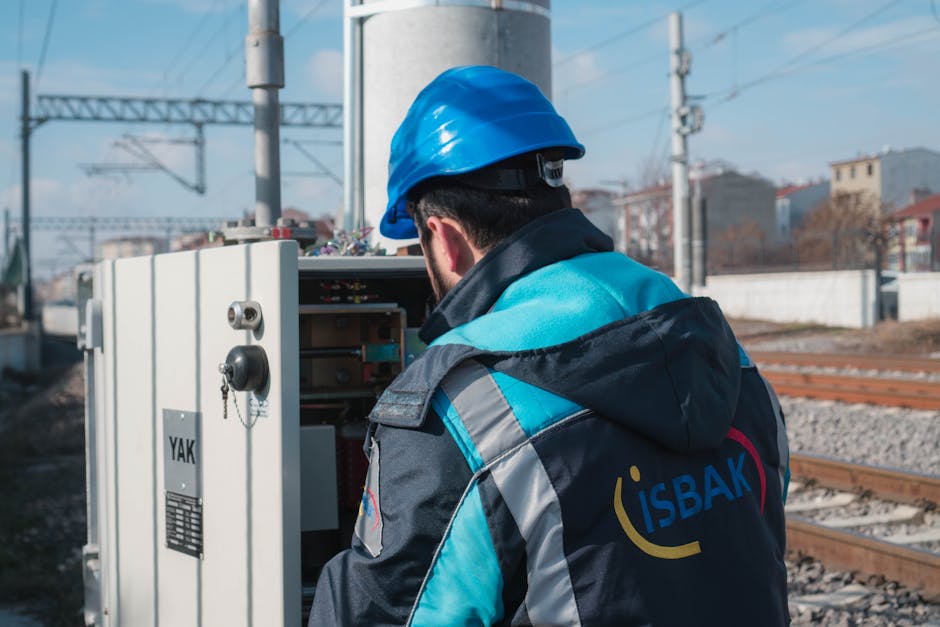
Occupational Health and Safety regulate minimum work distances to electrical sources with certain voltages and should be referred to before working near any high voltage sources. It is extremely important to recognize equipment in an abnormal condition such as an open electrical panel, exposed wiring, sparks, smoke, or fire. When you encounter this situation, use the look, listen, and smell approach, as this is an immediate cue that extra caution should be used. And may indicate a potentially dangerous situation is present.
Water or liquids pose additional risk of electrical shock due to high conductivity. The hazard should be removed, only after the area is deenergized. If you recognize a hazard that you cannot rectify, ensure that you ask questions and seek solutions from the appropriate personnel on-site. Do not take it for granted that other workers understand the scope of your work or that there is a potential danger to you or to them. Common PPE requirements on jobsites include cotton or fire-resistant pants. A cotton or fire-resistant shirt with a minimum 6 inch to full length sleeve. Electric shock-resistant or static-dissipative footwear. Type one and two class E and G protective headwear. Additional high vis clothing, safety glasses, and work gloves.
For electrical workers that conduct their tasks around energized equipment, you should be aware of the CSA standards Z462.
Competent workers need to be trained to this standard, which will help identify the hazards associated around electrical sources. What controls can be best used, as well as the additional specialized PPE required, such as arc flash clothing, arc flash face shield, rubber-insulated gloves which include leather protectors, and more. PPE is your last line of defense.
 Do not use PPE as a substitute for the opportunity to control or remove existing hazards. In the event that all safeguard systems have failed and a co-worker is being shocked, never come in direct contact with the worker or you may become entrapped in the shock cycle.
If possible, deactivate the power source, and activate your emergency response plan.
Working around electricity can be performed safely and without incident. By executing sound judgment and diligent observations in order to create your field level hazard assessment and by following the proper safe work procedures, you’ll be well on your way to completing your task without incident. Remember the importance of using the proper equipment in good condition. And by wearing the proper personal protective equipment.
By employing all these safeguards, not only will you help keep yourself and your co-workers safe, but you’ll also help ensure that you’ll return safely every day to the people who count on you the most.
[the_ad_group id=”76″]
https://clickbankprofit.biz/access/268.htm

 Fire engineers, who are real life fire scientists, have done many experiments that prove a closed door prevents smoke and fire from entering a room. If lots of smoke and fire and outside your bedroom door, and your door is too hot to touch, don’t open it. We don’t want to crawl through the hot, yucky smoke to look for an exit. In this case, we should stay in our bedroom, we should keep the bedroom door closed. When the door is closed, the fire and smoke will have a hard time getting into your room, and you’ll have plenty of clean air to breathe until help arrives.
 The Dr Eye Health show before you know that we’ve shared a lot of tips about doing warm compresses but warm compresses help for blepharitis because it helps soften up the hard eyelid crusts that have built up on the eyelashes as well as heat up the oil glands within the eyelid called the Meibomian glands and this helps melt any of the solidified waxy oils that are trapped in there and allows them to run smoother.
 I love company which if you’ve never heard about them I wanted to feature them today because they are just a super cool company and I encourage you to check them out it was founded by two optometrists who really wanted to make the highest quality products possible but also affordable and using natural ingredients which is all just amazing things so again happy to share them with you guys so if you want to check out any of the island products that were featured in today’s video check the YouTube description below I’ll put links to everything there.
 In fact, they pretty much solve a lot of pest problems in your garden. But the trick is you have to apply at a certain time, and you may have to reapply more than once in order to catch them, to interrupt the life cycle of these various pests that often pupate in the soil. So I’m going to walk you through the process. Here’s how we do it. First up, you’re going to need some way to apply the nematodes to soil surfaces and to leaf surfaces.
 If you use a backpack sprayer, make sure that the nozzle on the end of it is wide enough to release microbes out into the world. Otherwise they’ll just stay in your in your backpack sprayer. It needs to have at least an opening of 400 microns in order to make that work. Sometimes this powder can be a little clumpy so you might need to stir it. It’s going to be a little heavy, it’s okay.
 Warm compresses help with blocked meibomian, or oil, glands that we all have on our upper and lower eyelids. The lack of oil in our tear film causes quick evaporation of our tears that can lead to a type of dry eye where you make tears but not good quality tears that don’t really do a good job lubricating your eyes.
 The most important dry eye treatment I have is to lubricate your eyes with over-the-counter preservative-free tears and ointments. This is going to be the first treatment your eye doctor will suggest for any dry eye symptom, and preservative-free artificial tears are extremely safe and effective for pretty much all types of dry eye. Also, if you wake up in the morning with eye pain or irritation, or sleep with your eyes partially open, you might be drying out your eyes at night. I would recommend an ointment or gel. You can put a small amount, about the size of a grain of uncooked rice, in this inner pocket between your eye and lower eyelid right before you go to sleep.