
MLM Lead Pro Banner

Good Trans Fats vs. Bad Trans Fats

Artificial trans fats are one of the most prevalent poisons in our food supply; but most don’t know that healthy natural trans fats DO exist.

I’m going to talk about something today that most of you have probably never heard… that there is a distinction between good trans fats and bad trans fats. There is some evidence that the good trans fats can help you with fat loss, muscle building, and even cancer prevention, while the bad trans fats have been shown to cause heart disease, cancer, diabetes, and the general “blubbering” of your body.

I’m sure most of you have heard all of the ruckus in the news over the last few years about just how bad man-made trans fats are for your health. If you’ve been a reader of my newsletter and my Truth about Six Pack Abs e-book program, then you definitely know my opinion that these substances are some of the evillest food additives of all and are found in the vast majority of all processed foods and fast foods on the market today.

In my opinion, man-made trans fats are right up there with smoking in terms of their degree of danger to your health. After all, they are one of THE MAIN factors for the explosion of heart disease since approximately the 1950’s.

With all of the talk about trans fats in the news these days, I wanted to clarify some things, particularly regarding bad trans fats vs. good trans fats. If you’ve never heard of good trans fats before, let me explain in a bit.

The Bad Trans Fats

First, the bad trans fats I’m referring to are the man-made kind. These are represented by any artificially hydrogenated oils. The main culprits are margarine, shortening, and partially hydrogenated oils that are in most processed foods, junk foods, and deep fried foods.

These hydrogenated oils are highly processed using harsh chemical solvents like hexane (a component of gasoline), high heat, pressure, have a metal catalyst added, and are then deodorized and bleached. A small % of the solvent is allowed to remain in the finished oil. This has now become more of an industrial oil rather than a food oil, but somehow the FDA still allows the food manufacturers to put this crap in our food at huge quantities, even with the well documented health dangers.

These hydrogenated oils cause inflammation inside of your body, which signals the deposition of cholesterol as a healing agent on artery walls. Hence, hydrogenated oil = inflammation = clogged arteries. You can see why heart disease has exploded since this crap has been loaded into our food supply over the last 5 to 6 decades.

As time goes on, and science continues to unveil how deadly these oils really are, I feel that eventually they will be illegal and banned from use. The labeling laws were just the first step. In fact, certain countries around the world have already banned the use of hydrogenated oils in food manufacturing or at least set dates to phase them out for good.


However, keep in mind that as companies are starting to phase out the use of hydrogenated oils in processed foods, they are replacing them, in most instances, with highly refined polyunsaturated oils such as soybean oil, cottonseed oil, corn oil, etc, etc. These are still heavily processed oils using high heat, solvents, deodorizers, and bleaching agents. Even refined oils are known to produce inflammation in your body…a far cry from natural sources of healthy fats.

Don’t be fooled by the new onslaught of foods claiming “trans fat free”… if they use heavily refined oils (even if they’re non-hydrogenated), it’s still pure evil for your body, and very inflammatory.

Once again, for the best results, your best bet is avoiding highly processed foods altogether and choose whole, natural, minimally processed foods . Your body will thank you!

The Good Trans Fats

Ok, after having trash talked the man-made trans fats, let me clearly state that there is such a thing as healthy natural trans fats. Natural trans fats are created in the stomachs of ruminant animals such as cattle, sheep, goats, etc. and make their way into the fat stores of the animals.

Therefore, the milk fat and the fat within the meat of these animals can provide natural healthy trans fats (best in grass-fed organic versions only).

Natural trans fats in your diet have been thought to have some potential benefit to aid in both muscle building and fat loss efforts. However, keep in mind that the quantity of healthy trans fats in the meat and dairy of ruminant animals is greatly reduced by mass-production methods of farming and their grain and soy heavy diets. Meat and dairy from grass-fed, free-range animals always have much higher quantities of these beneficial fats.

One such natural trans fat that you may have heard of is called conjugated linoleic acid (CLA) and has been marketed by many weight loss companies. Keep in mind that these man-made CLA pills you see in the stores may not be the best way to get CLA in your diet. They are artificially made from plant oils in a manner similar to hydrogenation, instead of the natural process that happens in ruminant animals. Once again, man-made just doesn’t compare to the benefits of natural sources.

Here’s a great site I found that I use to order all of my healthy grass-fed beef and other free range meats .  The service is impeccable and they deliver right to your doorstep in a sealed cooler. It’s worth it to know that you and your family are actually eating meat that’s good for you instead of the normal grocery store junk.

Now that all of your labels should be listing grams of trans fat, keep in mind that if a quantity of trans fat is listed on a meat or dairy product, it is most likely the natural good trans fats that we’ve discussed here (*I only recommend grass-fed meat or dairy). Otherwise, if the quantity of trans fat is listed on any processed foods, it is most likely the dangerous unhealthy crap from artificially hydrogenated oils, so stay away!

One more important note about food labels and trans-fat listings … keep in mind that food manufacturers are allowed to label a food “trans-fat free” if 1 serving size contains less than 0.5 grams of trans fat.  So, you may see some products with hydrogenated oils as one of their main ingredients, but if they make the serving size small enough so that it contains less than 0.5 grams of trans fat per serving, they can label it as trans-fat free… now that’s BS!  just another example of our broken system!

https://hop.clickbank.net/?affiliate=aff61bz25k&vendor=mikegeary1&pid=61&tid=WeightLossTricks
Methyl sulfonyl met Hane Improves Knee Quality of Life Randomized, Double-Blind, Placebo-Controlled Trial- Hiroaki Nagatomo, Department of Orthopedic Surgery, Tokyo Medical University; Yuki Yamaguchi, Department of Sports Medicine, Waseda University

Intra-Articular Hyaluronic Acid for the Treatment of Osteoarthritis of the Knee: Systematic Review and Meta-Analysis. W. Rujes, P. Juni, S. da Costa, D. Trelle, E. Nisch, B. Reichenbach Institute of Social and Preventive Medicine, University of Bern, Bern, Switzerland MAJ, April 2005
Posted in Health | Tagged , , , | Leave a comment

The Top Fat Loss Secrets for Flat Six-Pack Abs and a Lean Stomach

I had the pleasure of being interviewed recently by a fitness professional from NYC, Certified Personal Trainer, Geovanni Derice. The interview is below and I think you’re going to like it… I reveal some of the hardest hitting strategies for getting rid of that stubborn stomach fat to uncover those flat six pack abs that everyone wants.

“GD: Welcome Mike to our 4-ever-Toned Fitness Journal. For those who do not know you, please tell us a few things about yourself and how you can help our readers with their fitness and health.

MG: Thanks for having me, Geo. Well, to go back a little, I have been heavily involved in fitness and sports for about 20 years now, ever since I was a teenager. Being involved in sports in high school got me interested in strength training and conditioning.

At that point, once I started feeling more energetic, getting stronger, and looking better, I was instantly hooked for life. I’m 36 now and still addicted to the way living a healthy and fit lifestyle makes me feel energetic, confident, strong, and youthful on a daily basis.

I decided earlier in my 20’s that I wanted to make the commitment to help other people experience the excitement of being fit and getting in the best shape of their lives, especially since we’ve reached an epidemic of obesity, heart disease, diabetes, cancer, depression, etc. That’s why I became a fitness professional. It just gives me so much satisfaction to help others, who have struggled for years to get in good shape, and show them that it can be done, and it can be fun in the process.

I’ve expanded over the years from just reaching local individuals with personal training, into being able to help people all over the globe achieve their fitness goals with the reach of the internet. I only hope that my passion for fitness inspires people to take action and improve how they look and feel for life.

GD: Now Mike, there’s so many things out there as to what works and what does not work… if you had to pick 3 things that work time and time again to get flat lean abs, what would they be?

MG: The first and most important thing to get control of in order to lose your belly fat and get flat abs is cleaning up your diet. Exercise is important, but your diet is king when it comes to losing body fat so that you can see your abs.

There’s so much confusion these days about what a healthy diet that promotes fat loss really is… after all, we are bombarded by conflicting messages in the media about what is healthy and what is not, and you have all of these gimmicky diet books about low carb, low fat, high protein, vegetarian, fasting, atkins, south beach, liquid diets, and hundreds more. There’s so much conflicting info, that the average consumer doesn’t even know where to start when it comes to eating for fat loss.

The second thing that works time and time again, is to focus on the intensity of your workouts and focus on working the body as a whole in order to get the best metabolic response to lose that stubborn stomach fat.

In order to really get lean, the workouts should have a high intensity, with short rest periods, working the largest muscle groups of the body, instead of trying to isolate specific small muscles like the biceps, triceps, or calves.

For the third thing, let’s talk about actually training the abs specifically. When it comes to training the abs, if you want real results, I always recommend forgetting about the crunches and situps for the most part. They are ok for someone that is really deconditioned, but most people that already have some training under their belt need a much better stimulus for their abs than crunches. Crunches are one of the abs exercises that actually provide the least amount of resistance, and remember that resistance is what develops and tones the muscles.

I provide a ton of great abs exercises in my book, but one of THE highest resistance exercises for the abs, is hanging leg raises (but NOT the way you see most people at the gym doing them). The key to doing these and actually working the hell out of your abs is to curl your pelvis up as you raise your legs. Almost nobody ever does this right. To be honest, the majority of people cannot do this at first, but I provide some strategies in my book as to how to progress to doing these correctly.

GD: What are people doing wrong when it comes to developing the coveted “6 pack abs”?

MG: Well Geo, I know this sounds funny to most people, but the MAIN thing that people are doing wrong to get those flat 6-pack abs is… are you ready for this?

They spend entirely too much time focusing on training their abs ! WAY too much time spent on abs exercises. Sounds crazy, but it’s true.

Remember, having a flat and visible six pack of abs is all about getting down to a low body fat percentage. In order to do that, your workouts must focus on stimulating a fat burning hormonal environment in your body, and increasing your metabolic rate. That just does not happen when you focus too much time training a small muscle group like the abs.
Instead, you must use the majority of your time focusing on training the largest muscle groups of the body like the legs, back, and chest. That’s what stimulates your metabolism and the fat burning hormones that will get you truly lean and sporting a flat sixxer!

GD: Which exercises are the top exercises that people need to do if they are to get maximum defintion with their midsection?

MG: When it comes to developing the abs themselves, I again refer to any kinds of hanging abs exercises, as well as some good floor abs exercises like lying leg thrusts (all described and illustrated in my book).

However, maximum definition in the abs and midsection comes from losing bodyfat, and the most effective exercises featured in my program for that goal are various forms of swings and snatches (unique dumbbell or kettlebell exercises that almost nobody ever does in normal gyms), squats, deadlifts, lunges, step-ups, clean & presses, mountain climbers, sprinting, and other full body exercises and calisthenics. If you want great looking flat abs, focus on those instead of focusing so much on training the abs directly!

GD: When it comes to diet Mike, people really have tried millions of ways to get one thing… and that is fat loss. What recommendations have you used to successfully help your clients lose body fat and keep it off?


MG: I have included a fully comprehensive discussion of this topic in my book, which accounts for almost half of the book, but I’ll try to make some nice simple generalizations to get people started on the right path immediately. The most important thing is that your diet is as natural and unprocessed as possible. It almost always comes back to the overprocessing of food that makes it unhealthy, and makes it totally wreck your metabolism and hormone balance in your body.

For example, why eat refined grains, when you can eat sprouted whole grains (keep in mind that I usually recommend strictly limiting grain-based foods overall for best results due to the problems with antinutrients and gluten in grains which are inflammatory).

Why eat refined sugar, when you can get natural sources of sugar from a high nutrient whole food like fruit. Why eat highly processed, refined, and hydrogenated vegetable oils (these are THE worst thing in the modern diet), when you can eat natural sources of healthy fats like nuts, avocados, fish, eggs, coconut milk, organically raised meat, and so forth.

The point is to not fall for some gimmick like extremely low carbs (although I do believe in a fairly reduced carb intake as that is a big problem for most people), low fat, super high protein, or any other combination that has you focusing on one macronutrient vs. another.

Your body needs all macronutrients to thrive and obtain a variety of vitamins, minerals, antioxidants, etc. Trying to cut an entire food group out just works against what your body needs. I get into much more detail on this vitally important topic towards losing body fat (especially that stubborn stomach fat) for life in my book.

program for lean flat absWell, I hope you enjoyed this interview and plucked several nuggets of info to get you motivated and started on showing off your flat abs shortly. If you don’t already own a copy, be sure to pick up a copy of my Truth about Six Pack Abs book and discover the entire system I’ve developed for ridding yourself of that extra ab fat for good!
Go here to see the results many of my readers are getting in losing stomach fat and getting lean abs .

https://hop.clickbank.net/?affiliate=aff61bz25k&vendor=mikegeary1&pid=68&tid=WeightLossTricks


https://www.ncbi.nlm.nih.gov/pmc/articles/PMC3820065/
IJBCP Assessment of Morus alba (mulberry) leaves extract for anti-psychotic effect in rats

https://www.ijbcp.com/index.php/ijbcp/article/view/3587


Posted in Health | Tagged , , , | Leave a comment

Physiotherapy Abdominal Hernia Exercises for HERNIA SUPPORT | Unsafe Core Exercises to AVOID

Which of the best abdominal hernia exercises to choose for your abdominal hernia recovery? And come to think of it, which abdominal exercises do you need to avoid to reduce your risk of abdominal hernia worsening? Hi, I’m Michelle. And today I’m guiding you through how to do abdominal exercises, and the best exercises to choose to improve your abdominal hernia support, then I’m going to guide you through some of the exercises that you really need to avoid reducing your risk of abdominal hernia worsening. Now the best exercises to choose are for the deep abdominal core muscles.

And we’re going to start those straightaway, I’m going to be taking you through these muscles, they wrap around right through your trunk, and they attached to your spine, just like a corset that you can see here. Now to do these exercises, all you need is a cushion or a pillow to support your head while we’re doing them in line, you can do them either lying on the bed, or you can do them on the mat at home too. So let’s get started now. Now we’re going to do these abdominal exercises in two different positions. The first position is lying on your side, and the second position is upright.

So, we’ll start with the lying down exercise, remembering that we’re using the deep abdominal muscles and you may not have used it in these in the past. So, I’ll just take my time and talk you through how to activate these muscles correctly, so you can use them during the course of your day. So coming into sidelining and remembering if you’re lying down with an abdominal hernia, lie down sideways, not backwards, because that uses your abs so come into line sideways. Now in this position, pillow underneath the head so that the head is supported, knees are bent, and a slight inward curve in the lower back. You can’t see that here with me.

But that’s the position we’re starting with. Now the muscles that we’re after, and these muscles down here. So, this is where the course that is that wraps around through the spine and this is that protective belly course, it when these muscles are active, it’s just like wearing a belly band, which is why it’s so beneficial with abdominal hernia. So the head comes down, bring your top hand and place it just inside this a bone near your pelvic bone, I like to put the heel of my hand on that bone there, and then slide my hand down, then let your belly relax forward. Take a deep breath in and out and let your belly really relaxed with a bulge forward.

Now in that position, what we’re going to do is using the hand here, drilling gently that lower part so you’re drawing it in. And this is a really gentle, subtle movement, it’s not a great big heart. Enjoy that like that and your back curve stays the same throughout. So, what you do with that hand is you move it in, and it just moves in just a fraction. And then you try to breathe as you hold that contraction, can you breathe with it.

And now see if you can relax and let go. Now sometimes you might find the pelvic floor muscles, the muscles in and around your pelvic openings might contract at the same time, that is absolutely fine. In fact, that’s a great thing if that happens. So, let’s do that one more time, so with your normal breathing, so breathing is really important with this. So, hand across that area, fingers across through the lower abdomen, and you’re aiming to move those fingers feel those fingers move inwards slightly with the contraction, but nothing should happen up here.

If you’re noticing that this part is moving in, you’re activating too strongly, this is a really gentle contraction, these muscles should work all the time throughout the day. Unfortunately, we just sometimes forget to use them. If you had surgery, if you’re overweight or you’ve had a baby, these muscles stopped working. So abdominal surgery is what I mean. So, using the hand over there, again, let’s go to the normal breath.

Breathing in and out, and out. Now very, very gently draw in that area just below your navel, move the hand, the hand should just just move in with a tiny bit. Now see if you can keep breathing and keep holding. Keep breathing and holding, keep breathing and holding those muscles on, and breathe and hold, and slowly, slowly relax. Now that is the technique to start this, and I really like doing this inside line because you can really feel the muscles working in that area and you can even look down you can see that lower abdomen moves in and out.

Now let’s move into our second position for these exercises so that you can do them during the course of the day. And that position is sitting or you might like to do them in standing as well. Now when you’re doing your abdominal hernia exercises, the second position to use is either sitting or standing. You need to train these muscles so that they work during the course of the day, not just lying down. So, you might like to start with the lying down exercise that I just showed you.

But then practice doing these exercises in sitting and standing at regular intervals during the course of the day. Now, this is how you do this same technique in sitting or standing, the very first thing to attend to is your posture. If you slumped forward, then your abdomen is going to bulge and more likely that your hernia will bulge too, so the very first thing you can do is to lift and you’re lifting through the crown of the head towards the ceiling and you’re raising your chest as if there’s a string from 45 degrees lifting you up, so you’re actually lifting the chest and the shoulders back and down away from your ears. Now in that position, again, you can bring your hands around through the front of the belly, the way I showed you before with the single hand. Now relax your breathing so breathing in and out.


And again, in through the nose and out. Now what I’d like you to do is this area, this lower area, just see the contents the area a little bit underneath your briefs, drawing it backwards in towards your body, just a tiny bit. Now see if you can hold that and hold and relax it down. Remembering the key things are, this is the area that we’re contracting, and you’re not pulling up through here. Now let’s do that one more time.

But this time, let’s try to breathe throughout. When these muscles are really working. If you haven’t used the before, you’ll find that you want to hold your breath and that’s totally normal. You’ll find that as you practice this, this will get much easier and you’ll be able to breathe normally. So, let’s do this one more time, hands up over the lower abdomen.

Think about your posture, lengthen your spine nice and tall. Breathing in and breathing out, and now very gently draw in the lower abdomen if you can, and now try to just breathe normally, breath in and out. It’s very, very subtle. It’s much harder than it looks, isn’t it? Keep breathing, and out and relax.

So that is the exercise to practice during the course of the day whenever you can think of it. So, it might be when you’re standing waiting in a queue. It might be even when you’re going for a walk as you start to improve. But that is the exercise aiming for up to 10 second holes, and really ideally trying to do these exercises up to 10 times a day. But the more you can do, the better, providing that you’re actually using the correct abdominal exercise technique.
Now which abdominal exercises do you really need to avoid to reduce your risk of abdominal hernia worsening? Well, surprisingly these are some of the most common exercises. They’re the exercises that exercise or train your upper abdominal muscles or your six pack muscles that you can see here. Now when these muscles contract, they increase the pressure within your belly. So they actually squeeze and they actually increase the pressure downwards and outwards for these are exercises that really need to be avoided.

Now some of these exercises that you can see on screen here exercises like your typical abdominal curl exercises, particularly your roller ab roller, those exercises are really intense on the abdominal core. And don’t forget some of the other exercises like your Pilates Reformer exercises that are intensely loaded. And even some of the yoga exercises that you might find like a V set that actually involve both the legs and the upper body raised off the ground at the same time. So really important to avoid these types of exercises to optimize your recovery, and choose the abdominal exercises that I’ve already shown you earlier in this video. So I really hope these exercises help you understand which are the best abdominal hernia exercises to choose for your overall support.

Try and do these exercises regularly throughout the days I’ve mentioned. And if you found the information helpful, or you’d like me to actually make more videos along these lines, I welcome your comments and really appreciate a like below because then YouTube will share the information with other people too that might benefit. Thanks so much for watching today. Look forward to seeing you in the next video. Goodbye for now.

https://link.hotrckng.com/aff_c?offer_id=34&aff_id=1331

Affiliate Success Toolkit https://warriorplus.com/o2/a/qm9m2vb/0

https://www.ncbi.nlm.nih.gov/pmc/articles/PMC4245568/

Posted in Health | Tagged , , , , , , , | Leave a comment

The 3 Best Abdominal Exercises that Are NOT Your “Normal” Ab Exercises

A unique ab workout that doesn’t contain your typical boring stomach exercises – no crunches or setups here!

Instead of the typical ab routines that we see so often with crunches, setups, leg lifts, etc… I like to give my readers better options for metabolism-boosting high intensity workouts that work their entire body while also working their abs… thus building rock hard abs & core but also creating a much better fat-burning workout than a typical ab workout.

I’m going to show you an example today of one of my favorites “ab workouts” that doesn’t include any direct “ab exercises” at all. This is actually a full body workout that works your abs pretty hard indirectly and stimulates a good metabolism boost!  It’s in a tri-set format (similar to a super-set but alternating between 3 exercises instead of 2).

Here goes:

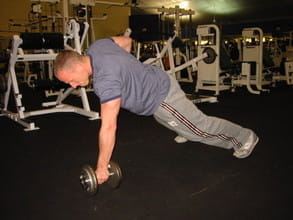
1a. Renegade Dumbbell Rows
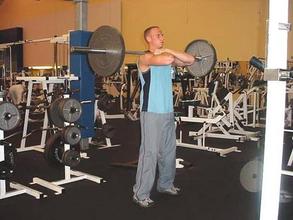
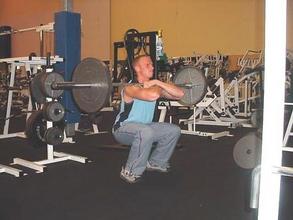
1b. Front Squats with Barbell
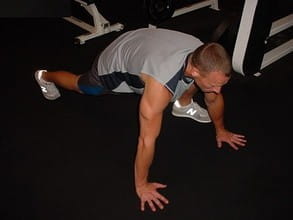
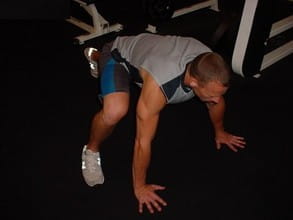
1c. Mountain Climbers on Floor

A good rep scheme to use with this could be 3-4 sets of 8 reps for each exercise, or more sets for less reps, such as 5 sets of 5 reps of each exercise. Mountain climbers can be done for a time interval (such as 30 seconds) instead of “reps”.

Exercise Pics & Descriptions:

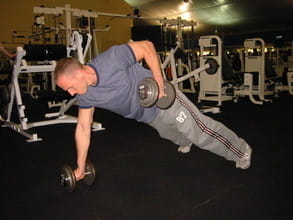
Renegade dumbbell rows are done starting in a pushup position with the hands on 2 dumbbells. You then row one dumbbell up while stabilizing your body with the other arm. Bring the dumbbell back to the ground and alternate the rowing arm while stabilizing with the opposite arm. This stabilizing effect during the rows creates incredible work for your entire midsection core area. Trust me… you’ll feel it in the abs!

renegade rows start position for solid core

renegade rows - great ab & core exercise
Renegade Rows shown above

Front squats are done similar to back squats, however with the barbell in front of your body on the front of your shoulders instead of resting on the upper back as in back squats. You stabilize the barbell on your shoulders by crossing your arms and pushing your fists into the bar against your shoulders while keeping your elbows out in front of the body.

This takes a little practice at first, so you will want to seek a professional trainer at your gym to help you with the form. Front squats require extreme stabilization strength from the abs due to the barbell weight being shifted to the front of the body instead of the back. Even though this is mostly a leg exercise, you’ll feel this one in the abs big time!  Any time I do front squats after not having done them for a while, I get a really deep soreness in my abs the next day.

front squats start position for rock hard abs

front squats - surprisingly good abdominal exercise
Front squats shown above

Mountain climbers are done by starting in a pushup position and then shuffling your feet in and out so that your knees are moving in under your chest and then back out to starting position. It sort of resembles climbing a mountain but flat on the floor. If you want an advanced version, you can also shuffle your hands 8-10 inches forward and backward in addition to the leg movements. This really makes it a full body exercise and MUCH more difficult than standard mountain climbers.

mountain climbers ab exercise start

mountain climbers - great ab exercise
Mountain Climbers shown above

After finishing each exercise, try to move to the next exercise with very minimal rest (no more than 15-20 seconds).  Rest about 1-2 minutes after completing each “tri-set” before repeating the sequence.

This will give you one of the best ab workouts you’ve ever had without even doing any direct ab exercises…. and with a LOT more fat-burning metabolic effect compared to standard ab exercises…  You’ll see what I mean after you try it!  This can be used as a stand-alone workout (as it can be very intense if you use challenging weights), or you can incorporate it as a portion of your full body workout.

https://hop.clickbank.net/?affiliate=aff61bz25k&vendor=mikegeary1&pid=74&tid=WeightLossTricks


Posted in Health | Tagged , , , | Leave a comment

The #1 MOST Important Diet Lesson You Will Ever Learn

The BEST Way to Eat a Truly Healthy Diet for a Lean Body and Disease Prevention

This article might surpise some people… because most people don’t view nutrition in this way that I’m about to explain.  Instead, most people get thoroughly confused about nutrition and calories, protein, carbs, fat, diet foods, low-fat, low-cholesterol, low-carb, healthy label claims, vegetarian, raw foods, etc, etc.

However, if you view nutrition in this way that I’ll explain below, it solves every single confusion about nutrition that you could ever have.  I will warn you though, this is very BIG PICTURE thinking, and it helps explain a lot about the human body when you think about things this way.

Ok, the #1 MOST important aspect about nutrition involves the study of ARCHAEOLOGY (and anthropology)!

What the heck am I talking about?  Well, let’s dig in…

Yes, everything about the human body that is either healthy or bad for us currently, all stems from hundreds of thousands, or even millions of years of evolution and how the human body adapted to everything around us, including food, exercise, our environment (city vs nature), and lots more.

We know from archaeological records that our current human species (homo sapiens) originated approximately 200,000 years ago… however, our close cousins (ancestors prior to homo sapiens), such as homo erectus, date as far back as several million years.

If you study evidence about what our ancestors ate, it gives obvious clues about how the human digestive system evolved and what are the healthiest foods for us to eat in today’s world.

This obviously explains why relatively new chemicals and food types (that humans were NEVER meant to ingest) cause so many health problems, such as artificial sweeteners , HFCS and other corn derivatives, white bread and other refined grain products, refined oils such as soybean and unhealthy canola oils , and so on.

Now this discussion could get pretty involved and encompass an entire book, so let me give some important statements to best summarize this:

1.   Despite what you’ll hear from extreme vegans, extreme raw foodists, and other believers in “extreme” types of diets that eliminate entire portions of the historical human diet, the human digestive system evolved to eat a mixture of plants and animal foods (yes, we evolved as omnivores), as well as a mixture of raw food AND cooked food .

I know, I know… You’ll get heated debate about both of these topics…meat eating vs veganism, and raw foodyism… however, it’s historical FACT that our current species (and historical ancestors back over a million years ago) in almost every culture around the world, ate at least some % of plant-animal food combination and raw food / cooked food combination (even if it was at different times of the day, or even different times of the year).

Some cultures, such as the Inuit of the arctic and several tribes in Africa, thrived in stellar health on almost an entirely animal-based diet, and other cultures around the world thrived on almost an entirely plant-based diet… But all cultures generally had some mixture of plant and animal foods, even if the amount of animal food was small in some cultures, or the amount of plant food was small in other cultures.

Similarly, virtually every culture around the world has also historically consumed BOTH raw foods and cooked foods in differing amounts of each… but there’s no real evidence of societies thriving on 100% raw food diets.

But what about the argument that raw foodists make claiming that all animals in nature eat 100% raw foods, but humans are the only species that eats cooked food…

Well, there’s a simple explanation for that… humans were the ONLY species with a well developed enough brain to understand how to control fire and therefore cook our food… And since we’ve been cooking a portion of our foods for the entire existence of our species (200,000 years) as well as our ancestors back several million years, our digestive systems have adapted to eating a portion of our food cooked.

This also explains why acrylamides are more harmful to animals that eat cooked food compared to humans … since humans have adapted some level of tolerance to acrylamides from eating a partial cooked diet for 100’s of thousands of years, but animals have never historically adapted to a cooked food diet, and therefore, are more sensitive to acrylamides.

If you’ve never heard of acrylamides, they are formed when the outside of foods are burned during cooking (such as the browning on breads or other baked goods, browning on deep fried foods, or the charring of vegetables cooked over a flame, etc) and these compounds are potentially carcinogenic to both humans and animals.  Cooking foods with water, and also using high antioxidant herbs and spices in cooking helps reduce acrylamides and protect you against them.

The bottom line… we were designed through evolution to eat a mixture of both plants and animals as well as cooked and raw foods … But let’s clarify an important point in #2 below…

2. Although I say that we were meant through evolution to eat an omnivorous diet of both plants and animals, one thing that we were NEVER meant to eat is factory-farm raised animals, or eggs or milk from factory-farm raised animals.

Factory farming is an entirely new phenomenon that’s still only decades old, so essentially, these types of meat products were never meant to be part of the human diet.

Chemically (nutritionally), factory-farm animal products are VASTLY different from animal products that were raised the way they were meant to live and eat. Examples of these differences can be seen glaringly in the nutrition profiles of grass-fed meats vs grain-fed factory farm meat, free range eggs vs factory eggs, wild fish vs farmed fish, and so on.


We’re talking about major differences in omega-3’s vs omega-6’s, differences in vitamins and minerals, differences in other healthy fats such as CLA, and lots more.

So although I don’t fully agree with veganism at least from a nutritional standpoint (moral arguments aside), I also don’t agree with our current state of affairs of the majority of our food supply of factory farm raised animal products (at least here in the US, where the condition of the factory farm animals and nutritional quality of the food is horrendous).

That’s why I try to not support the factory farm industry as much as possible (which is most meats and dairy in your supermarket) and instead, I try to eat almost solely grass-fed meats from free ranging animals, wild game, wild fish, eggs from local farmers from free roaming hens, and dairy only from grass-fed cows that are allowed to graze almost entirely on forage.

3.   Although I point out that many historical cultures around the world thrived on vastly different percentages of animal products vs plant products in their diet, here is another type of food that we were NEVER meant to eat:

PROCESSED FOOD

Yes, I know it hurts to hear it, but cakes, cookies, crackers, microwaved meals , chips, sodas, granola bars, sugary sports drinks or energy drinks , and 1000’s of other products that line our supermarket shelves were never meant to be part of the human diet, so it’s obvious why it causes so many health problems for us.

This gets back to what I always say about trying to include as many “1-ingredient” foods as you can in your diet if you want to eat like we were meant to eat.


“1-ingredient” foods means healthy meats, eggs, nuts, seeds, beans, tubers, fruits, and veggies .  It’s really that simple.

4.   Ok, this one starts to get a little controversial… but, remember that agriculture is also a relatively new phenomenon in the big picture of the human diet when you expand far back in history a couple of million years.  And when I’m talking about agriculture, I’m mostly talking about the massive influx of grain-based foods into the human diet that occurred with the invention of agriculture.

The mass production of grains through agriculture is only a few thousand years old… Compare that to our ancestors historical existence as hunter-gatherers as far back as a couple of million years, and our current species (homo sapiens) 200,000-year history as hunter-gatherers.

If you think about it, as hunter-gatherers, we would have had very limited access to grains, and they would have encompassed a very small % of our historical calorie intake, since they weren’t mass produced and processed. Instead, we thrived on mostly game meats (including the organ meats, where most of the micro-nutrients are found), wild fish and seafood, eggs, nuts, seeds, beans, tubers, fruits, and veggies.

From this perspective, grains probably never accounted for more than 1-3% of our historical calorie intake… and as you know from one of my recent articles, currently our modern processed diet that the average person eats consists of 67% of total calories from grains such as corn, soy, and wheat and their derivatives … now THAT’S a shocking revelation in why our entire food supply is backwards, and how that affects your waistline !

It also makes you think about how ridiculously wrong our “food pyramid ” really is, which promotes the bulk of our food to be eaten from grains.

I could go on with more examples, but I think you’re seeing the major points here… the most important aspect to eating a healthy diet that promotes a lean, healthy body is to acknowledge what our ancestors ate throughout the millions of years of evolution.

And that certainly wasn’t processed “diet foods” with fancy label claims deceiving you into thinking they’re healthy… instead, it was the 1-ingredient foods I listed above, eaten in a combination of raw food and cooked food.

A couple final thoughts on how to fit these suggestions into your healthy eating plan:

1.   Try to become a “locavore” as much as possible… if you can get local farm-fresh produce, that is the most environmentally and socially responsible, as well as healthy way to get your produce.  Research if you have farmers markets and farm stands that might be in your area, or deliver to your area.

2.   Try to choose organic foods as much as possible… but local food will many times trump organic food that had to travel thousands of miles to make it to you.

3. When choosing meat and eggs, try to choose grass-fed meats as much as possible, free range chicken, turkey, and pork raised in a humane manner, and eggs from hens that truly roam free outside instead of being confined to “chicken factories”.  Many times, this means making the effort to seek out local farms or co-ops that deliver to urban areas.  This site is a great source of meats that were raised in the healthiest manner, and they deliver right to your doorstep:  http://healthygrassfed.2ya.com

Remember that eating healthy and responsibly doesn’t mean eating bland boring food… there are tons of ways to eat in a healthy and socially/environmentally responsible manner, and we describe in depth how to do this in our Fat Burning Kitchen Program .


Banner

https://hop.clickbank.net/?affiliate=aff61bz25k&vendor=mikegeary1&pid=310&tid=WeightLossTricks

Posted in Health | Tagged , , , , , , , , | Leave a comment